 50b57614cf
* feat(api): introduce swagger

* feat(api): anottate api

* chore(api): tag endpoints

* chore(api): remove tags

* chore(api): add docs for oauth auth

* chore(api): document create endpoint api

* chore(api): document endpoint inspect and list

* chore(api): document endpoint update and snapshots

* docs(endpointgroups): document groups api

* docs(auth): document auth api

* chore(build): introduce a yarn script to build api docs

* docs(api): document auth

* docs(customtemplates): document customtemplates api

* docs(tags): document api

* docs(api): document the use of token

* docs(dockerhub): document dockerhub api

* docs(edgegroups): document edgegroups api

* docs(edgejobs): document api

* docs(edgestacks): doc api

* docs(http/upload): add security

* docs(api): document edge templates

* docs(edge): document edge jobs

* docs(endpointgroups): change description

* docs(endpoints): document missing apis

* docs(motd): doc api

* docs(registries): doc api

* docs(resourcecontrol): api doc

* docs(role): add swagger docs

* docs(settings): add swagger docs

* docs(api/status): add swagger docs

* docs(api/teammembership): add swagger docs

* docs(api/teams): add swagger docs

* docs(api/templates): add swagger docs

* docs(api/users): add swagger docs

* docs(api/webhooks): add swagger docs

* docs(api/webscokets): add swagger docs

* docs(api/stacks): swagger

* docs(api): fix missing apis

* docs(swagger): regen

* chore(build): remove docs from build

* docs(api): update tags

* docs(api): document tags

* docs(api): add description

* docs(api): rename jwt token

* docs(api): add info about types

* docs(api): document types

* docs(api): update request types annotation

* docs(api): doc registry and resource control

* chore(docs): add snippet

* docs(api): add description to role

* docs(api): add types for settings

* docs(status): add types

* style(swagger): remove documented code

* docs(http/upload): update docs with types

* docs(http/tags): add types

* docs(api/custom_templates): add types

* docs(api/teammembership): add types

* docs(http/teams): add types

* docs(http/stacks): add types

* docs(edge): add types to edgestack

* docs(http/teammembership): remove double returns

* docs(api/user): add types

* docs(http): fixes to make file built

* chore(snippets): add scope to swagger snippet

* chore(deps): install swag

* chore(swagger): remove handler

* docs(api): add description

* docs(api): ignore docs folder

* docs(api): add contributing guidelines

* docs(api): cleanup handler

* chore(deps): require swaggo

* fix(auth): fix typo

* fix(docs): make http ids pascal case

* feat(edge): add ids to http handlers

* fix(docs): add ids

* fix(docs): show correct api version

* chore(deps): remove swaggo dependency

* chore(docs): add install script for swag
130 lines
4.4 KiB
Markdown
130 lines
4.4 KiB
Markdown
# Contributing Guidelines
|
|
|
|
Some basic conventions for contributing to this project.
|
|
|
|
## General
|
|
|
|
Please make sure that there aren't existing pull requests attempting to address the issue mentioned. Likewise, please check for issues related to update, as someone else may be working on the issue in a branch or fork.
|
|
|
|
- Please open a discussion in a new issue / existing issue to talk about the changes you'd like to bring
|
|
- Develop in a topic branch, not master/develop
|
|
|
|
When creating a new branch, prefix it with the _type_ of the change (see section **Commit Message Format** below), the associated opened issue number, a dash and some text describing the issue (using dash as a separator).
|
|
|
|
For example, if you work on a bugfix for the issue #361, you could name the branch `fix361-template-selection`.
|
|
|
|
## Issues open to contribution
|
|
|
|
Want to contribute but don't know where to start? Have a look at the issues labeled with the `good first issue` label: https://github.com/portainer/portainer/issues?q=is%3Aopen+is%3Aissue+label%3A%22good+first+issue%22
|
|
|
|
## Commit Message Format
|
|
|
|
Each commit message should include a **type**, a **scope** and a **subject**:
|
|
|
|
```
|
|
<type>(<scope>): <subject>
|
|
```
|
|
|
|
Lines should not exceed 100 characters. This allows the message to be easier to read on github as well as in various git tools and produces a nice, neat commit log ie:
|
|
|
|
```
|
|
#271 feat(containers): add exposed ports in the containers view
|
|
#270 fix(templates): fix a display issue in the templates view
|
|
#269 style(dashboard): update dashboard with new layout
|
|
```
|
|
|
|
### Type
|
|
|
|
Must be one of the following:
|
|
|
|
- **feat**: A new feature
|
|
- **fix**: A bug fix
|
|
- **docs**: Documentation only changes
|
|
- **style**: Changes that do not affect the meaning of the code (white-space, formatting, missing
|
|
semi-colons, etc)
|
|
- **refactor**: A code change that neither fixes a bug or adds a feature
|
|
- **test**: Adding missing tests
|
|
- **chore**: Changes to the build process or auxiliary tools and libraries such as documentation
|
|
generation
|
|
|
|
### Scope
|
|
|
|
The scope could be anything specifying place of the commit change. For example `networks`,
|
|
`containers`, `images` etc...
|
|
You can use the **area** label tag associated on the issue here (for `area/containers` use `containers` as a scope...)
|
|
|
|
### Subject
|
|
|
|
The subject contains succinct description of the change:
|
|
|
|
- use the imperative, present tense: "change" not "changed" nor "changes"
|
|
- don't capitalize first letter
|
|
- no dot (.) at the end
|
|
|
|
## Contribution process
|
|
|
|
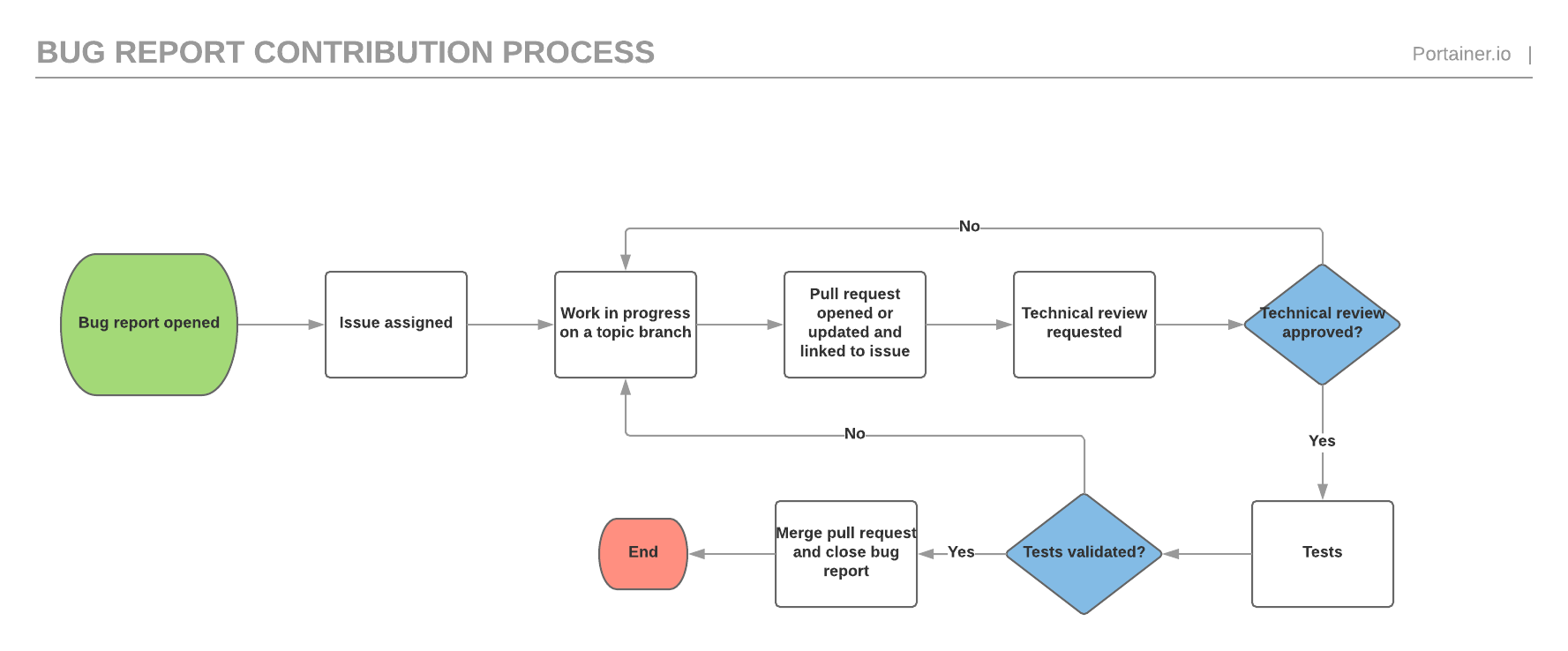
Our contribution process is described below. Some of the steps can be visualized inside Github via specific `status/` labels, such as `status/1-functional-review` or `status/2-technical-review`.
|
|
|
|
### Bug report
|
|
|
|
|
|
|
|
### Feature request
|
|
|
|
The feature request process is similar to the bug report process but has an extra functional validation before the technical validation as well as a documentation validation before the testing phase.
|
|
|
|

|
|
|
|
## Build Portainer locally
|
|
|
|
Ensure you have Docker, Node.js, yarn, and Golang installed in the correct versions.
|
|
|
|
Install dependencies with yarn:
|
|
|
|
```sh
|
|
$ yarn
|
|
```
|
|
|
|
Then build and run the project:
|
|
|
|
```sh
|
|
$ yarn start
|
|
```
|
|
|
|
Portainer can now be accessed at <http://localhost:9000>.
|
|
|
|
Find more detailed steps at <https://documentation.portainer.io/contributing/instructions/>.
|
|
|
|
## Adding api docs
|
|
|
|
When adding a new resource (or a route handler), we should add a new tag to api/http/handler/handler.go#L136 like this:
|
|
|
|
```
|
|
// @tag.name <Name of resource>
|
|
// @tag.description a short description
|
|
```
|
|
|
|
When adding a new route to an existing handler use the following as a template (you can use `swapi` snippet if you're using vscode):
|
|
|
|
```
|
|
// @id
|
|
// @summary
|
|
// @description
|
|
// @description **Access policy**:
|
|
// @tags
|
|
// @security jwt
|
|
// @accept json
|
|
// @produce json
|
|
// @param id path int true "identifier"
|
|
// @param body body Object true "details"
|
|
// @success 200 {object} portainer. "Success"
|
|
// @success 204 "Success"
|
|
// @failure 400 "Invalid request"
|
|
// @failure 403 "Permission denied"
|
|
// @failure 404 " not found"
|
|
// @failure 500 "Server error"
|
|
// @router /{id} [get]
|
|
```
|
|
|
|
explanation about each line can be found (here)[https://github.com/swaggo/swag#api-operation]
|